"Knowing I can say 'This sucks and I hate it' — That matters"
Be the person who puts her hands on her heart.

I went to college with Nicki Pombier, a New York-based writer, oral historian, and public artist who writes about motherhood, disability, and language over at her Substack Mother Tongue. Her son Jonah was born with what she describes as a "pile of diagnoses" (specifically Down syndrome, autism, and hearing loss) and she writes about motherhood, disability, and language beautifully. I recommend you subscribe.
I realized the potential for a witchy chat when she wrote about how much Jonah enjoys signing "Mommy was WRONG!" Kids! Amirite?
You've written that when Jonah was born and you were in grad school, rather than talking to parents of children with Down syndrome, you wanted to speak to people with Down syndrome. What did you learn from those conversations?
Nicki: After Jonah was born the questions I had were: What is it like to be a person with Down syndrome? I didn't know where to find people with Down syndrome, and that struck me as fucked up. I also thought, I don't know that I want to talk to other parents, because I want to have my own experience before I hear about other people's experiences.
The thing I was most worried about at first was: Am I going to be able to communicate with my son? Is this someone I'm going to be able to know as a person as he gets older? That betrays the assumptions I had about Down syndrome that I didn't know I had before I had my kid. I felt like, okay, I need to talk to people with Down syndrome, because I want to understand, not just intellectually, the ways I'm wrong: I want to experience it.
What stuck with you from those discussions?
A parent was present in the room during one interview. Then, as I was leaving, the person I'd interviewed said, "Can I meet you again, and you interview me without my parent in the room? I'm just a little bit of a different person when they're around." I was like, "Oh my God, of course." No other adult would have had to tell me, "My parents are great, but that's them. I'm my own self."
The people I was interviewing were public speakers. They had this public persona built around advocating that being a person with Down syndrome is great, and all the things it has to teach. But people found ways to tell me, both on and off the record, about the things that were hard.
They know what it's like to be in the world in a way where they understand there can be a layer of distance between them and others, and it's the profound loneliness I heard from some people that has stayed with me. I see it in my son all the time. The social desire is there, but it's scrambled by the communication complications. Hearing from adults about how they've negotiated that barrier really impacted me.
You mentioned on your website that you realized your own ableist assumptions after Jonah was born. What did you have to reckon with?
I realized how separate we are, and that separation is social and structural. I had thought a lot about separation in terms of race and class—I studied abroad in South Africa six years after apartheid ended, and came home wanting to dig in on structural inequality here, something I thought I’d paid a lot of attention to. So I was shocked and ashamed to realize that people with intellectual disabilities were so separated that I hadn’t even met or really even considered anyone like Jonah until I gave birth to him.
It feels ugly to even put language to it, but if I unpack this sense of difference, it’s that people with disabilities like his are not in the same place as me, that they're not viable people for relationships. I feel like such an asshole saying that, but that's what the separation taught me.
I don't know what special ed was like in your schools growing up, but the kids were apart from us. I'm sure there were kids in our classroom who needed things they weren't getting, but the kids who were disabled the way Jonah is were nowhere to be seen. They were only heard. We could hear them passing in the halls, and people made fun of them, used the r-word.
That word is only ever a variation on "stupid." The word "idiot" is actually a slur of the same category. That's a word I've tried to excise from my vocabulary. It's not about policing language or shaming people, although I find it extremely shitty and telling that the r-word seems to be fair game for anyone to use. But looking at the meaning and understanding the origins together makes me want to change the way I talk.
You said you're not into language policing, but what's a form of ableism you see that gets to you?
Something that gets my goat is impatience. We just move differently, and there's no cajoling this kid. He's going to fucking win. I can't ask everyone around me to be a Zen master, but we live in a society that is extremely impatient. I am grateful when people show patience, and cranky when grown-ass adults are visibly impatient when I'm trying to cross the street, or taking a little extra time to get through a door. My ex (and Jonah’s dad) Jed took him to Coney Island last weekend, and some total assholes were giving him shit about Jonah taking time getting into the ride. I'm like, fuck you. What the fuck, you're adults.
A less obvious one is this celebration of excellence. I'm not against excellence, but there's an aggressive valuing of a certain kind of achievement that leaves a lot of people out, and leaves no space to value the kind of intelligence my kid has. That's opened something up for me to be joyful about lots of things I see in people, to appreciate growth wherever it happens.
I loved when you talked about Jonah getting a kick out of signing "Mommy was WRONG!" Do you give it back to him? What are you guys able to joke or tease him about?
I don't risk teasing; I'm not poking the bear. We have a lot of bits, though. "Mommy was wrong" is his favorite thing to say when I actually am wrong; he's so happy to get to say it. Sometimes I'll use it to get out of an upsetting situation. If he wants to go to a certain ice cream place and it's closed, I'll say, "Uh-oh, it's closed. Mommy was wrong."
There are a couple things I actually tease him about. He has some crazy radar for distant sirens, like it hits his hearing in exactly the right place — he'll attune to it, tip his head up, open his eyes wide, make this little "oh" with his mouth, and his nose goes up. I tell him, "You look like an outlet."
Here's a good example of how social and mischievous he is, and how capable of joking: his teacher texted us last year that they'd taught him the sign for "trash." He went around to everyone, saying their name, and signing "trash." He was trash-talking everyone and cracking himself up.
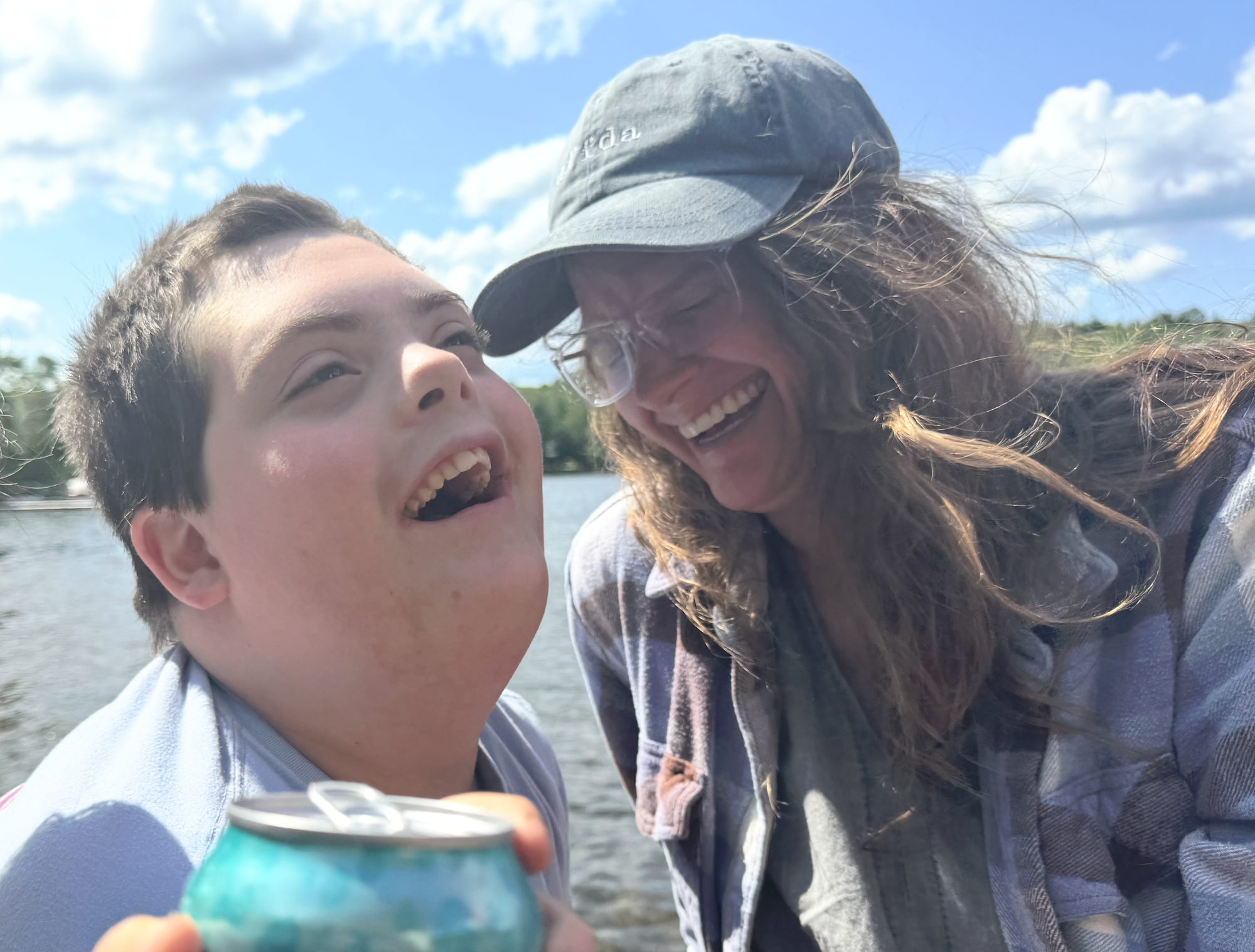
You wrote in your newsletter about him having a meltdown, and a friend texting you, "What can I do?" and you said, "Punch me in the face." What, if anything, actually helps during a “big moment”— in the moment or after?
With her, it helped that she asked what she could do. I felt seen. She wasn't afraid, and she was signaling her willingness to try even though she didn't know what to do. If there are people in your life who you think might be struggling, just reaching out matters. Knowing I can say "this fucking sucks and I hate it" to someone, and have that be okay: That matters.
For strangers: if you see someone throwing chairs or having a big moment, get out of their way. You're not someone they need to worry about hurting. On the other hand, you can simply ask if you can help.
Once, Jonah was having a huge moment getting on the school bus a couple of years ago; cars backed up down the block. I was braless, in a sweatshirt that said "Happy Camper," barefoot, hair a mess, my kid throwing Crocs. This asshole behind the school bus starts laying on the horn. I was salty. Finally, I gave up, and the bus drove off without him, but I stood there with both middle fingers up.
The one who'd honked rolled down her window and yelled, "You're so stupid, miss." Then the woman behind her rolled down her window and just put her hands on her heart. Be the person who puts her hands on her heart.
Speaking of that — you also talked about giving the double bird to kids at a presentation. When there's a parent or guardian nearby when kids are being jerks, what has helped, when your feelings are hurt, either for yourself or on Jonah's behalf?
Curiosity about difference is different from mocking or making fun of someone.
Once we were eating out after a hike, and Jonah, who used to be really sensitive about food temperature, had food come out a little too hot. He banged his plate and made loud sounds. There was a troop of Boy Scouts nearby, and I could see them putting their heads together, looking up at him, laughing, making faces, mocking him. On my way out, I told their troop leader, "I think half your table was making fun of my son." He said, "Oh my gosh, I'm so sorry," and then ran out to my car afterward: "I talked to them, they confessed, they said they did it, we're going to talk about it, I'm sorry, that's not okay."
That felt good. Somebody's going to make this a real conversation, and find a way to meet the kids where they're at. My hope wouldn't be for them to feel shut down. Sometimes people should feel ashamed, but my hope is more for something longer-term: an appreciation for difference.
Has your older son, Jackson, ever told a kid or their parent, "You're being an asshole"?
No. I actually asked him about that last night (he’s 22). He said, "My generation's take is, that's their business. Don't give it power by acknowledging it. You're not going to change people."
I asked, "What if someone was making fun of your brother, directly?" He said, "That's different. I'd be like, 'Yo, what the fuck is your problem?'" So generationally, he'd get angry out loud, but he didn't seem convinced it's on him to teach the world at large.
I'm still processing that. Because that's the one thing I grew up feeling convinced of — that I'm somehow responsible for the world at large. Maybe a combo of my upbringing and my gender and my generation, the micro-generation at the tail end of GenX and beginning of Millennials.
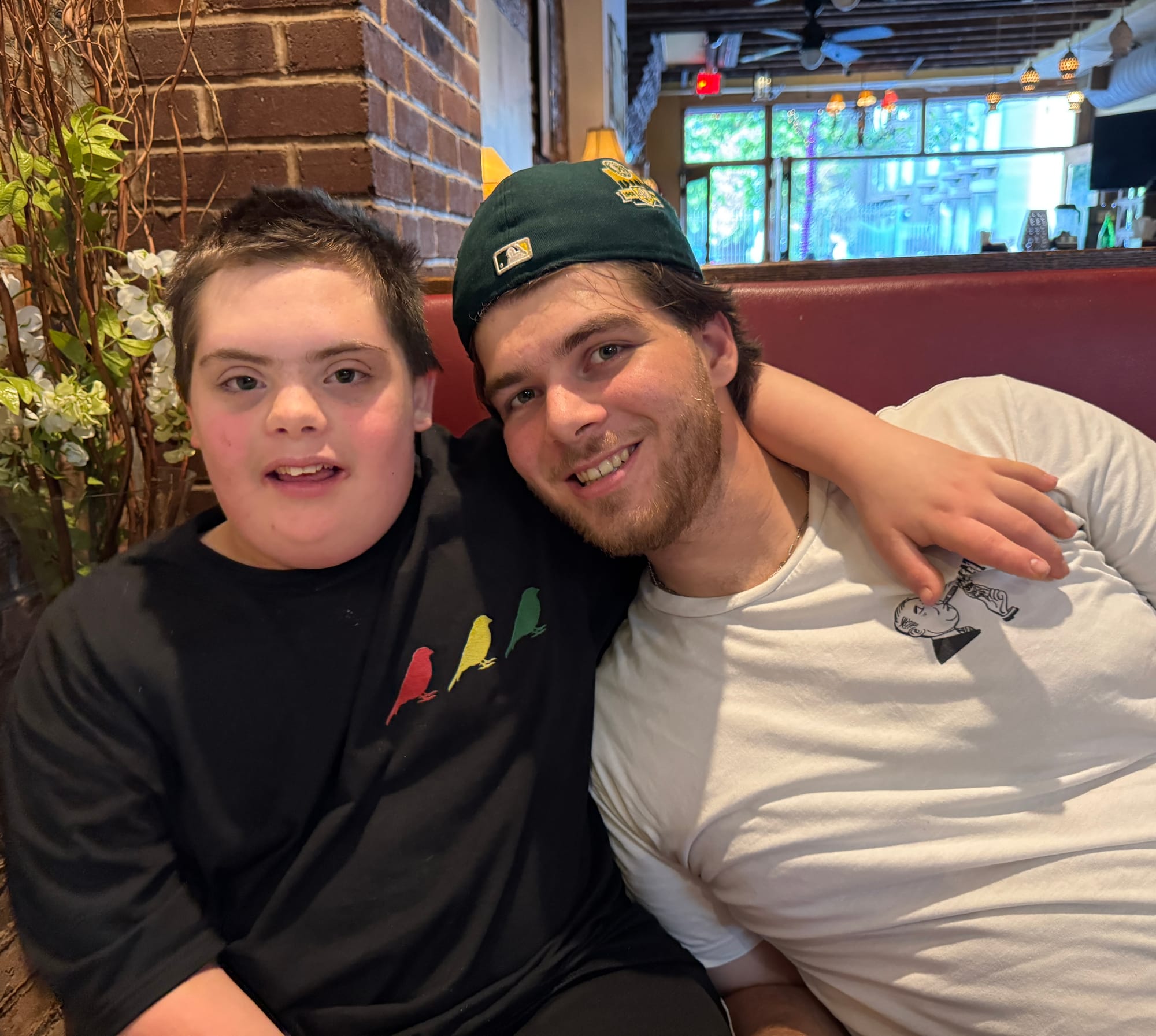
Jackson was seven when Jonah was born. Even with a neurotypical baby, that's a big shift in attention for the older kid — and Jonah needed even more. What helped you make sure Jackson still felt seen and centered?
He had a big baseball life — travel baseball, which is resource-intensive, both in the fucked-up money sense and in attention. Our whole family was organized around his baseball for most of his childhood. I'm not saying I'd recommend that, but looking back, that structure kept us tangibly engaged in Jackson's life. Longer term, I think because of the age gap, and because Jed and I split when Jackson was eleven and Jonah was around three, they just had different upbringings. They're almost like two only children.
I think it changed my relationship with Jackson. I'll always have a different relationship with each of my kids, and so much of myself has gone into Jonah. I love and cherish my relationship with Jackson. I have a closeness with him I never had with my own parents, and I'm proud of that. But I also know that in some way his family evaporated, because it changed so dramatically when Jonah was born, and that makes me sad.
If you were talking to another parent with a kid like Jackson and a kid like Jonah, what advice would you give about maintaining that relationship with the older child?
Just keeping that relationship alive. Tending to it, being available for them to express how they feel about all of it. We've never pressured or forced Jackson to engage with disability in an intentional way, like making sure he always comes to the inclusive playgroup on Saturdays, or gets invested in Jonah's therapies. My hope is that impact emerges through who he is as a person, without a resentment baked into it.
What do you advise about raising a kid like Jonah while divorced from his co-parent?
I can say what's made it work for us. What makes it work is how close Jed and I still are, the quality of the relationship we've built post-divorce, in part because life with Jonah required so much communication. Maintaining open communication feels paramount. For us that's been enhanced by both of us having partners we love who also love each other and are on board for all of this.
We have a group text with all four parents; the name changes over time, we keep adding jokes to it. Gallows humor helps. Having relationships where I can completely break down, because I know I'm not the only one — believing there's a net under all of it. Jed and I have actually gotten closer than we were when we were married, because our relationship has grown through communication.
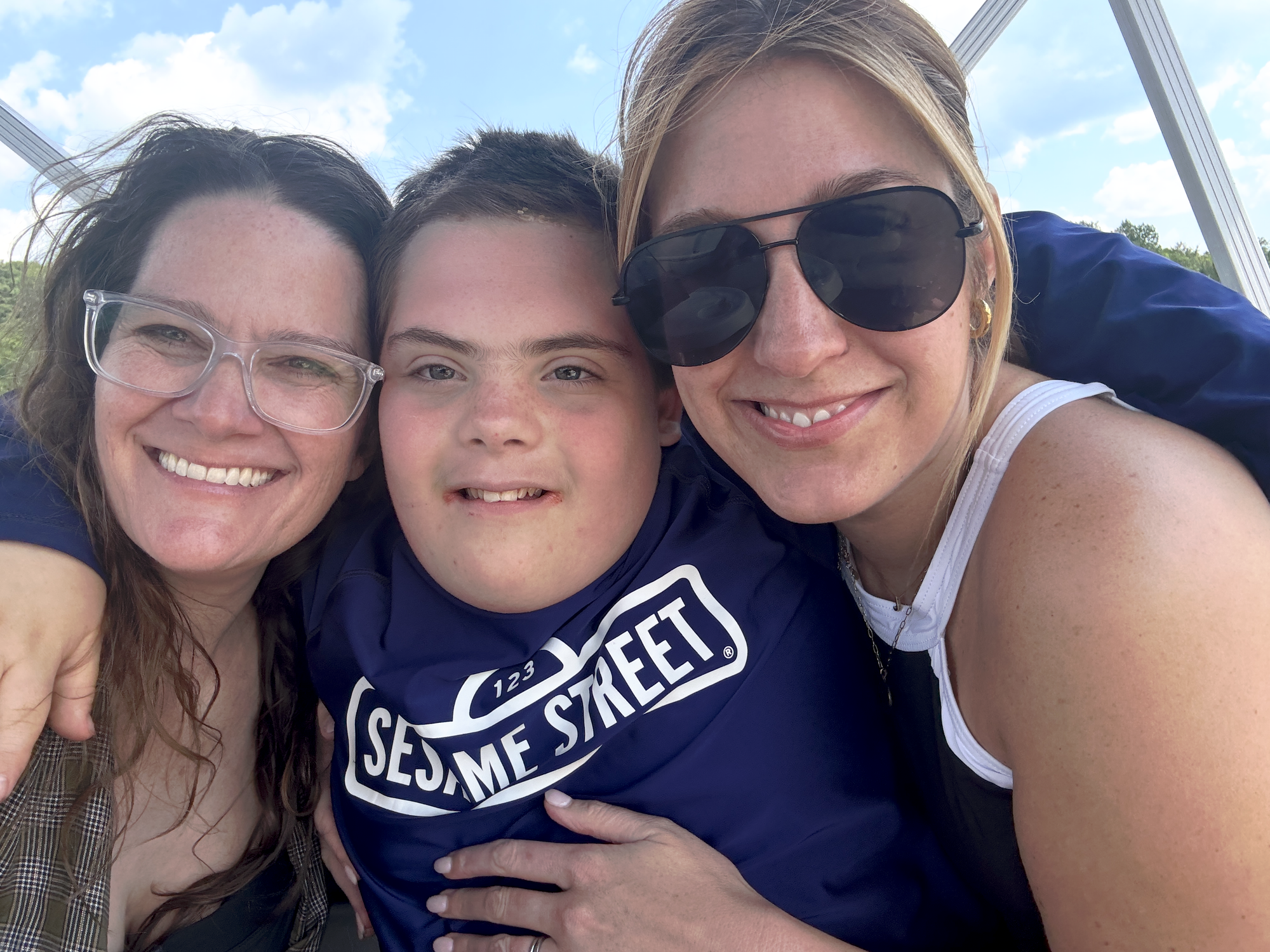
If there's a mom whose kid has these kinds of needs, and she feels like, "This is going to be my whole identity now" — what do you advise about maintaining your own interests, your own vibe, staying yourself?
The things about your life, about yourself, that you love — those might be the things that save you. They might be what you most need, in some material or soul way. The things you love might be what you most need, so don't let that become secondary. I know it's not always possible, so I don't want this to become another stick to beat yourself up with — but who you are, at your dearest heart, is all you've got, and that's so important. Whatever it takes to feed that — protect it. Keep blowing on those coals.
I love that part of your oral history projects is recording loved ones' laughter. What, regarding kids or not, has made you laugh big relatively recently that you can remember?
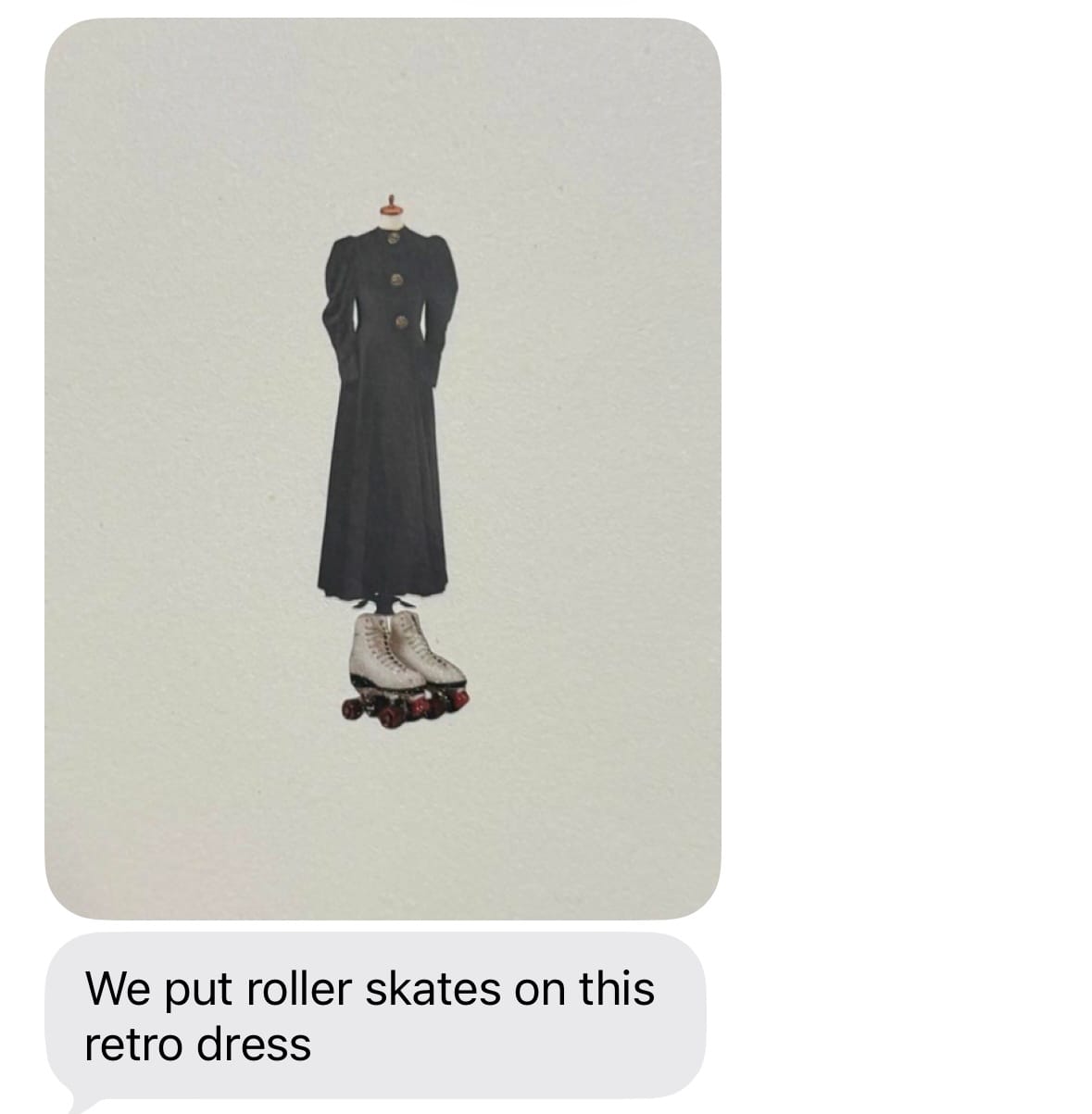
I was at a gathering in Montreal with a bunch of oral historians, and we had these sticker books to decorate our name tags with. One was a "retro" sticker book. I was flipping through, one page had a Polaroid camera, a record player, and then I turned the page, and it was a full-on Victorian dress. I was like, "Retro? What are we — is this what Gen Z thinks retro is?"
What's something people focus on too much, or not enough, when it comes to raising kids like Jonah?
I keep thinking about the recent story of influencers who ended a pregnancy after learning the fetus had Down syndrome.
I avoided engaging with this story for a bit. On the one hand, pre-natal testing is a major entry point for talking about Down syndrome, and I never want to discourage anyone from reaching out to me if they know someone dealing with a prenatal diagnosis. Or in the case of a story that goes viral like this, asking me what I think. But on the other hand, there’s a lot underlying the story that is difficult to confront.
When I finally did read about this couple, my first response was a kind of despair at the misinformation about Down syndrome they had when making their choice, which they then spread in their post about their decision to abort. Everyone has the right to make their own choice about their pregnancy, but it’s worrisome to see people doing so based on bad or wrong information. My friend George Estreich is also a parent of a person with Down syndrome, and a deep and thoughtful writer. He shared something that struck me—the way that this puts the onus back on those of us living with someone with Down syndrome to not only correct misinformation, but to argue, again, for the value of our kids' lives, despite the challenges, and to do it in a way that isn't simplified.
There's a real intensity to being in relationship with Jonah that I don't think gets accounted for in a lot of the stories about Down syndrome out there.
What I'd love is — and this is why I'm writing, in the hopes that it's possible — for Jonah to be seen in his full humanity, and to be able to write honestly about my own. To be able to write about what's fucking hard, not because Down syndrome or Autism or hearing loss is a tragedy, but because it's my life. My life has been changed by Jonah and is in many ways defined by our relationship. It's not always easy, or always hard.
I'd like to be able to write honestly about the ways he makes my life rich and joyful and the things that are hard for me without risking reinforcing some assumption that the world would be better off without people like Jonah in it. That's what the influencer story brings up for me, that's why it's hard to look at.
Some people have asked me, "Did you get tested?" All I can hear is the shadow question: "Would you have chosen him, if you had known?" I don’t fault people for making the choices they need to. But I think differently now about what goes into the calculation around what one wants, in their child, or what you think you can control for. I also know how resource-intensive caregiving for Jonah is, so the social nets underlying what makes a choice even possible for people matter.
Jonah is alive now. He’s a person, not an abstract. He's not an idea I toss around. I would choose him, because I love him. I love who he is. I don't speculate about who he might have been; there's no him without his disabilities, and there's no me without him. Yes, it's hard. I've been hit, I've had things thrown at me, I've had my eye scratched. But my kid isn't reducible to these so-called "behaviors.” He is a fully human human; he's got the full range of feelings and expressions. I want to be able to love the full range of feelings and expressions in myself, too. I love him, exactly for being him. He's really fucking hard and amazing.
End credits
Thanks for reading Evil Witches, a newsletter for people who happen to be mothers. This issue is free to forward to anyone who you think might find it interesting or helpful or inspiring.
Want to read an issue for parents getting calls from the school already about their bad-ass little kids? Go here. Want to read a validating issue on how maternal rage is normal? Yo. Want to just read something funny and dumb? I got you.
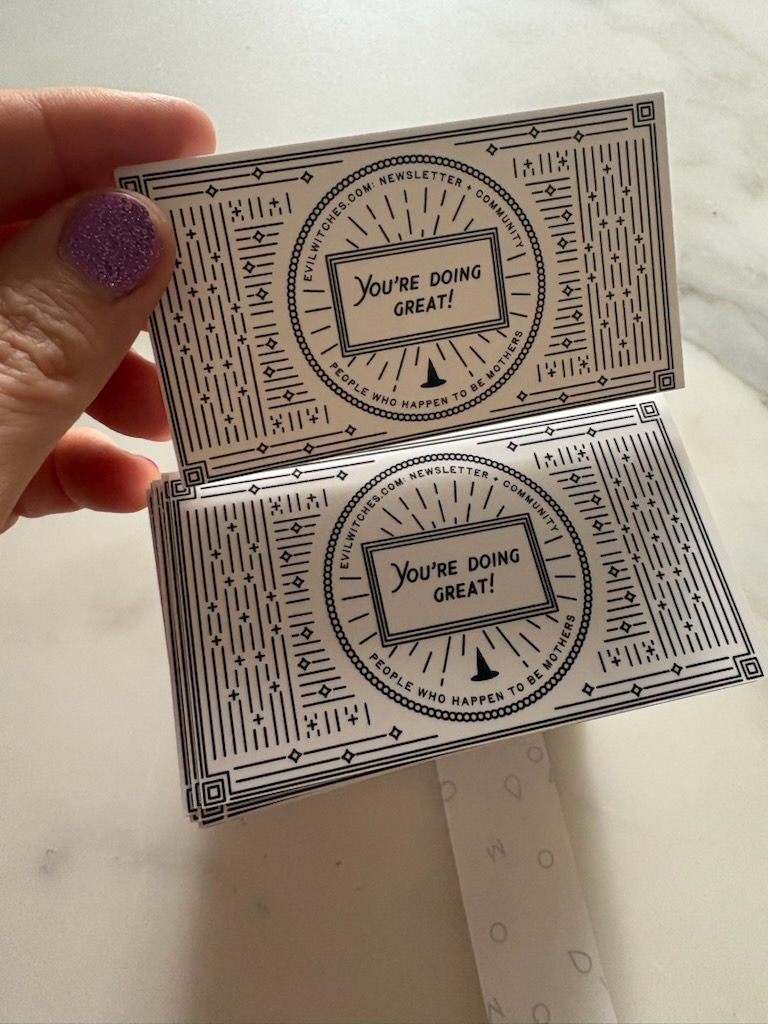
Even though this issue is not paywalled, if you're feeling benevolent and want to do your bit ensuring journalists get paid for their work you can always drop me a tip here or become a paid subscriber here. If you become a paid subscriber this week and forward your subscription receipt to ew.clairezulkey@gmail.com with your address I'll mail you 5 of my goofy You're Doing Great! cards to slip to your friends or under the windshield of the lady struggling with 3 tiny tots at the Trader Joe's parking lot.
One witchy thing
Text from a friend who took her child to Europe this summer: